Design Insights & Furniture Guides
Expert advice, custom upholstery guides, and home styling inspiration from Houston's furniture craftsmen.
Choosing the right Storage Ottomans in 2026 requires more than admiring polished photos. A useful ottoman must balance storage capacity, comfort, stability, and everyday durability. It should open smoothly, support regular seating, and fit beneath a coffee table without blocking movement. Small details matter. A reinforced hinge, washable fabric, and a firm lid can change daily use.
This guide examines ten leading models through practical criteria. These include internal dimensions, weight limits, upholstery quality, assembly requirements, ventilation, and surface performance. We also consider verified customer feedback and manufacturer specifications. A storage bench for blankets needs different strengths than a compact cube for toys or shoes. Real homes are rarely as tidy as showroom displays.
No ranking is flawless.
Some models may look luxurious but reveal weak stitching after repeated use. Others may offer impressive capacity while feeling uncomfortable under the legs. I would test each ottoman beside a sofa, near a doorway, and in a smaller apartment setting. That comparison exposes awkward lids, sharp corners, and wasted space. Prices and availability can also change during 2026, so readers should confirm current details before purchasing. The final selection aims to provide clear, evidence-based guidance, while acknowledging that personal taste, room size, and household habits still influence the best choice.
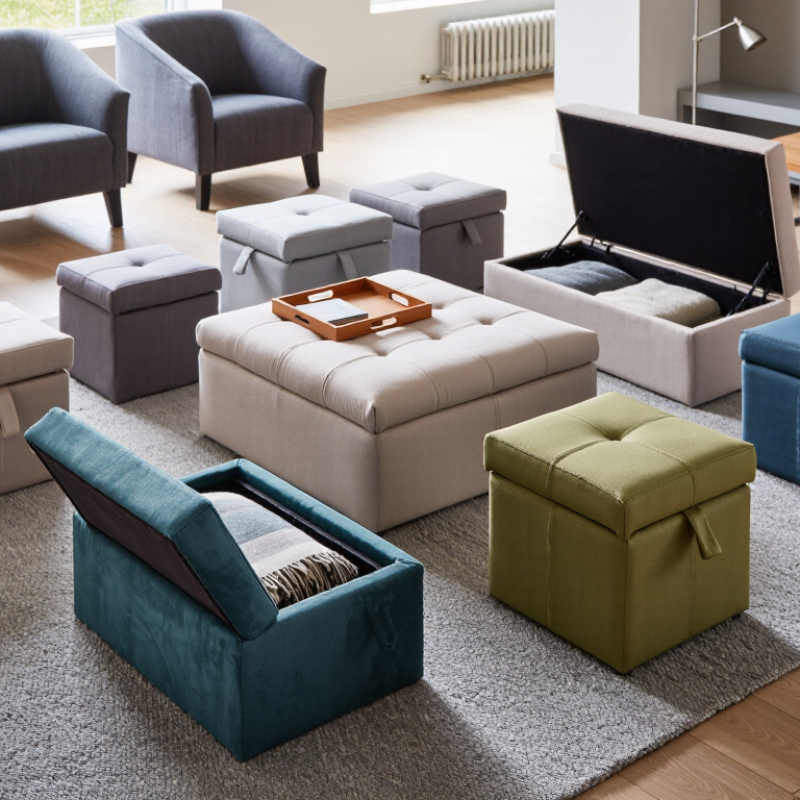
A storage ottoman combines a padded seat, a stable base, and concealed internal space. Its hinged or removable top usually stores blankets, toys, books, or remote controls. Unlike a basic footstool, it performs several daily tasks. It can support tired legs, provide temporary seating, or hold a tray during meals. Some models also divide the interior into smaller compartments. That detail matters when loose items quickly become clutter.
Space efficiency is driving interest in multifunctional furniture. The National Association of Home Builders reported a median new-home size of about 2,411 square feet in 2023. Rooms remain active, not empty. A storage ottoman can sit beside a sofa, under a console, or at the end of a bed. Grand View Research valued the global home furniture market at approximately $550.7 billion in 2023 and forecasts continued growth through 2030. Its broader data does not isolate storage ottomans, so precise ottoman forecasts should be treated carefully.
In 2026, practical selection should focus on more than appearance. Check the hinge resistance, lid clearance, stitching, ventilation, and weight capacity. A deep compartment may seem useful, but it can become a hiding place for forgotten objects. That is a small design failure. Measure walking paths before buying. Leave enough clearance to open the lid without striking a table. For homes with children, rounded edges and slow-closing hardware deserve closer attention. A fabric surface also needs stain testing, because real living is rarely gentle.
When comparing the top ten storage ottomans for 2026, start with material quality. Solid wood frames usually resist wobbling, while plywood offers strength with less weight. Medium-density fiberboard can look smooth, but moisture may weaken exposed edges. Check the hinges, corner joints, and underside fabric. These details often reveal construction quality better than photographs.
Upholstery also changes daily use. Tightly woven polyester handles crumbs and frequent cleaning. Velvet feels softer, yet it can show pressure marks around busy seating areas. Leather-like coverings wipe clean, but heat may make them feel uncomfortable. Size should match both the room and the storage task. Measure the opening, not only the outside length. A 36-inch ottoman may hold blankets, but its interior could shrink because of thick padding.
Weight limits require careful reading. Some listings state static capacity, meaning weight placed gently. Sitting, leaning, or dropping into the lid creates greater force. I prefer a published seating limit and a separate storage limit. No number listed? That is a warning sign. I once chose a compact ottoman by appearance and ignored its shallow compartment. My tape measure would have prevented that mistake. Test the lid movement, too. A heavy lid needs controlled hinges, especially near children or pets. Specifications can be incomplete, so compare measurements with real household objects, such as a folded quilt or a stack of books.
A strong 2026 storage ottoman should support your legs without feeling like a rigid box. For the top ten, I would check seat height, foam resilience, surface grip, and edge softness. A useful hands-on test is simple: sit for ten minutes, shift position, and open the lid without standing. The lid should stay balanced, not drop suddenly. BIFMA seating durability protocols often examine products through 100,000-use cycles, so sellers should provide test details rather than vague “heavy-duty” claims. Comfort is personal, though. A firm cushion may suit reading, while softer foam can feel better during television viewing.
Organization depends on usable volume, not advertised capacity. Measure the interior after accounting for hinges, dividers, and thick padding. A shallow tray can hold remotes, chargers, and magazines without creating a dark cluttered cavity. For blankets, a deeper compartment works better, but ventilation still matters. The U.S. Environmental Protection Agency reports that indoor pollutant levels can be two to five times higher than outdoor levels, and sometimes much higher. Low-emission materials, removable liners, and odor-resistant finishes deserve attention. Look underneath. Uneven feet quickly become annoying on hard flooring.
Safety needs equal weight in any ranking. Choose rounded corners, slow-close hinges, and lids that resist finger pinching. Check the weight limit for both sitting and storage. The U.S. Consumer Product Safety Commission advises consumers to inspect furniture stability and secure items that can tip; a low ottoman is safer, but not automatically risk-free. Avoid loose hardware and exposed staples. My ranking would remain provisional because comfort testing is often subjective, while marketing measurements can be optimistic. That uncertainty should be disclosed.
A cube ottoman offers flexible seating and fits under desks. A tufted design adds traditional character, although deep buttons can collect dust. A woven ottoman brings texture to coastal or relaxed interiors.
A tray-top model supports drinks and books, provided the surface stays level. A nesting pair gives households adaptable seating without filling the room. A slim hallway ottoman stores shoes, scarves, or small bags. A children’s ottoman should have light lids and safe, rounded edges.
Function deserves more attention than photographs suggest. Check the hinge strength, fabric seams, internal lining, and weight rating. Sit on the lid before buying, if a showroom allows it. For online orders, compare inside measurements rather than outside dimensions. A large frame can hide a surprisingly shallow compartment. That mistake is common.
Value depends on daily use, not only the sale price.
Performance may change after a year. My ranking is not flawless because comfort remains personal. Firm foam supports feet better, while softer padding feels inviting during longer seating. Removable covers help with spills, but zippers can weaken. Choose the ottoman that fits your routine, floor space, and tolerance for maintenance.
Choosing among the top 10 storage ottomans for 2026 starts with the room, not the upholstery. A compact ottoman suits a narrow hallway or small bedroom. Larger models work better in living rooms, where blankets and books need hidden space. Measure the available floor area first. Leave enough clearance for doors, drawers, and walking paths. I once bought a handsome ottoman that blocked a cabinet. It looked fine, but daily use became annoying.
For family rooms, choose a firm, wide ottoman with a hinged lid and reinforced stitching. Rounded corners reduce bumps around children. A bedroom ottoman may need a softer surface for dressing, while an entryway model should resist dirt and frequent contact. Look for removable covers or tightly woven fabric. Check the internal storage depth, not only the outside dimensions. Shallow compartments often hold less than expected.
Think about weight, ventilation, and movement. A heavy ottoman stays stable beside a sofa, but casters help when cleaning. Locking casters are safer than loose wheels. Test the lid before buying. It should open smoothly and remain supported without slamming. Inspect hinges, seams, and the base. Small details matter.
The best choice may not be the most stylish one. A lighter color can brighten a dark room, yet it may show marks quickly. Storage needs also change over time, so avoid filling every inch. Leave some space for items you have not planned for.
This comparison ranks common storage ottoman formats by their typical usable storage capacity. Use the room and capacity information to match an ottoman with your space, seating needs, and storage requirements.
Larger lift-top benches and sectional ottomans are best for blankets, pillows, and seasonal items, while cubes and compact round ottomans work better in entryways, bedrooms, and smaller living rooms. Capacity is an approximate practical range and may vary by construction and interior design.
It combines a padded seat, stable base, and hidden internal compartment. Its top may hinge or lift off. It can store blankets, toys, books, or remote controls.
Use it as a footrest, temporary seat, tray holder, or bedside bench. It can also organize loose items near a sofa or entryway. Small tasks matter.
A cube or slim rectangular ottoman usually saves floor space. A round model softens sharp furniture lines, but its curved storage area may waste room.
Measure the ottoman’s outside and inside dimensions. Check walking paths and lid clearance. Leave space beside tables and other furniture. A large frame may hide shallow storage.
Look for rounded edges, stable construction, and slow-closing hardware. A lightweight lid reduces trapped fingers. Avoid placing heavy objects inside. Small details protect little hands.
Inspect hinge resistance, stitching, fabric seams, lining, and weight capacity. Sit on the lid when possible. Online, compare internal measurements and customer photographs carefully.
Removable covers help manage spills, but zippers may weaken over time. Woven fabric adds texture, while tufting can collect dust. Test fabric cleaning needs before purchase.
Not necessarily. Deep storage may hide forgotten objects beneath blankets and toys. Dividers can prevent clutter. My view is imperfect, because household habits change.
Firm foam supports tired legs, while softer padding feels better for longer sitting. Value depends on daily use, maintenance, and durability. A cheaper ottoman may disappoint after one year.
This 2026 guide explores what makes Storage Ottomans practical, versatile, and valuable additions to modern homes. It explains how these multifunctional pieces can serve as footrests, extra seating, coffee tables, bedside surfaces, and discreet storage for blankets, books, toys, or everyday essentials. Readers will also learn how to compare upholstery materials, frame construction, dimensions, weight limits, lid styles, and interior capacity to find an option that matches their lifestyle and available space.
The guide presents the top 10 Storage Ottomans for 2026, organized by design, function, comfort, organization, safety, and overall value. It highlights important details such as stable hinges, secure lids, child-friendly edges, easy-clean fabrics, ventilation, and portability. Whether furnishing a living room, bedroom, entryway, office, or compact apartment, readers will gain practical advice for selecting a storage ottoman that balances appearance, durability, usability, and room-specific needs.