Texas map with Houston marked Crafted in Houston, Texas
Living Designs Furniture Texas Mattress Makers

Design Insights & Furniture Guides

Furniture & Design Blog

Expert advice, custom upholstery guides, and home styling inspiration from Houston's furniture craftsmen.

0%

The 2026 market for Factory-Direct Custom Furniture is expanding as buyers seek lower costs, flexible designs, and clearer production control. Grand View Research valued the global home furniture market at approximately USD 142.9 billion in 2023. Its report forecasts steady growth through 2030, supported by online retail, urban housing, and customized interiors. Fortune Business Insights also expects the broader furniture market to grow from hundreds of billions of dollars toward the end of this decade.

These figures suggest opportunity, but they do not identify reliable suppliers. A factory can display beautiful showroom photos and still miss deadlines. Buyers should examine material samples, production videos, quality-control records, export experience, minimum order quantities, and replacement policies. A dining table deserves more than a polished photograph. Check its edge banding, moisture protection, drawer runners, and packaging corners.

Ingvar Kamprad, IKEA’s founder and a major figure in modern furniture manufacturing, once said, “To design a desk which costs $1,000 is easy; to design a good desk for $50 requires the very best.” His observation remains relevant to Factory-Direct Custom Furniture. Affordable pricing should not mean careless construction. However, price comparisons are imperfect. Freight rates, timber grades, finishes, tooling, and inspection standards can change the final cost quickly. This guide evaluates the 2026 Top Factory Direct Custom Furniture Suppliers through those practical details, not marketing claims alone. It also recognizes an uncomfortable truth: no supplier performs perfectly across every product category, market, or order size. Reliable sourcing requires evidence, communication, and occasional skepticism.
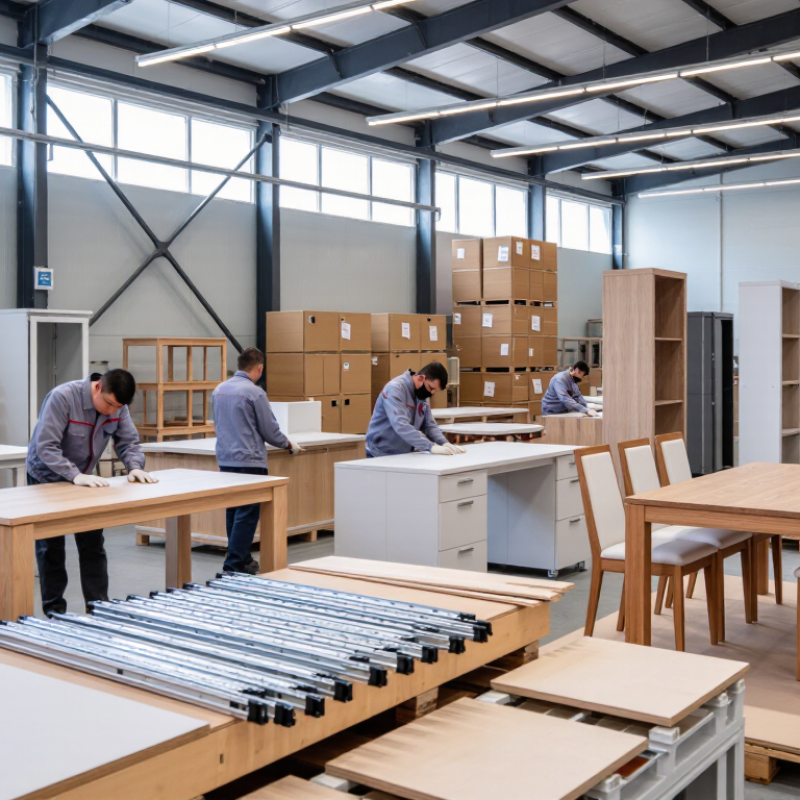
2026 Top Factory Direct Custom Furniture Suppliers?

What Are Factory-Direct Custom Furniture Suppliers?

Factory-direct custom furniture suppliers produce and sell pieces from their own manufacturing facilities. They remove several trading layers between the workshop and the buyer. This structure can improve price control, design communication, and production visibility. The difference is practical. A buyer may discuss a 2.4-meter dining table directly with the engineering team, rather than through a general retailer.

These suppliers usually support custom dimensions, materials, finishes, packaging, and hardware selection. A reliable supplier should provide drawings, material samples, prototypes, and a clear production schedule. During factory evaluations, inspect cutting equipment, finishing rooms, storage areas, and final inspection procedures. Ask how moisture content is tested for solid wood. Ask how color differences are recorded. Details matter.

Professional buyers should also review minimum order quantities, payment terms, shipping responsibilities, and warranty procedures. Independent quality checks can verify dimensions, surface defects, assembly strength, and packaging protection before shipment. Certifications may support claims about timber sources, emissions, or workplace systems, but certificates should be checked with the issuing organization.

Factory-direct does not automatically mean dependable. I have seen attractive samples hide weak drawer slides and uneven lacquer. That mistake is expensive. A written specification, approved sample, and inspection plan reduce uncertainty, although they cannot remove every production variation.

How to Evaluate Custom Furniture Manufacturers in 2026

How to Evaluate Custom Furniture Manufacturers in 2026

The global furniture market remains highly competitive. Statista Market Insights estimates worldwide furniture revenue will exceed US$780 billion in 2025. This scale creates choices, but also creates noise. A factory-direct supplier should provide verifiable production records, material specifications, and recent project evidence. Ask for factory videos, not only polished showroom images. Check whether the machinery matches your required finishes, joinery, and production volume.

Quality needs measurable proof. Request wood moisture readings, panel density details, coating specifications, and inspection records. ISO 9001 certification can indicate controlled processes, but it does not guarantee beautiful furniture. Independent inspections remain valuable. The 2024 Global Supply Chain Risk Report from the Business Continuity Institute highlights supplier disruption as a continuing business concern. Evaluate backup material sources, realistic lead times, packaging tests, and documented corrective actions.

Pricing deserves careful analysis. A low quotation may exclude tooling, sampling, export packaging, or replacement parts. Compare the same bill of materials across suppliers. Require a signed sample approval before mass production. I have found that small details matter: drawer alignment, edge consistency, odor after unpacking, and carton corner protection. Some suppliers communicate well but measure poorly. That weakness is easy to miss. Leave room for doubt, and verify every important promise.

2026 Top Factory Direct Custom Furniture Suppliers? - How to Evaluate Custom Furniture Manufacturers in 2026

Evaluation Dimension Recommended Weight Competitive 2026 Benchmark Evidence to Request Suggested Scoring Method
Customization Capability 15% Documented ability to modify dimensions, materials, finishes, hardware, packaging, and construction details. Technical drawings, sample approval procedure, bill of materials, and change-control records. 5 = full design-to-production support; 3 = limited modifications; 1 = catalog-only production.
Factory Ownership and Production Control 12% Direct control of key processes such as cutting, joinery, upholstery, finishing, and final inspection. Factory address, production-flow video, process list, equipment list, and subcontracting disclosure. 5 = most major processes in-house; 3 = mixed control; 1 = primarily trading or outsourcing.
Minimum Order Quantity and Sampling 8% Sample production available before mass production; pilot orders accepted with clearly stated minimum quantities. Sample quotation, prototype lead time, sample revision policy, and pilot-order terms. 5 = flexible sampling and low pilot risk; 3 = standard sampling; 1 = high commitment before validation.
Quality Management System 12% Documented incoming-material, in-process, pre-shipment, and corrective-action procedures; ISO 9001 certification is an additional indicator. Quality manual, inspection checklist, defect records, corrective-action reports, and valid certification documents. 5 = audited system with traceable records; 3 = basic inspection; 1 = informal visual checking only.
Material Safety and Regulatory Compliance 12% Materials suitable for the destination market, including applicable composite-wood formaldehyde requirements such as TSCA Title VI or CARB Phase 2. Recent laboratory reports, material declarations, adhesive specifications, safety data sheets, and test scope. 5 = current, product-specific reports; 3 = partial documentation; 1 = unsupported claims.
Sustainable Material Traceability 8% Traceable wood or wood-based materials, documented recycled content where claimed, and controlled waste-management practices. Chain-of-custody documentation, valid forestry certification where applicable, supplier declarations, and waste records. 5 = independently verifiable traceability; 3 = supplier declarations only; 1 = no documentation.
Production Lead Time and Capacity 10% A written production schedule with capacity planning, realistic peak-season allowances, and milestone updates. Capacity plan, production calendar, historical on-time-delivery data, and escalation procedure. 5 = reliable schedule with measured performance; 3 = reasonable estimates; 1 = undefined timing.
Cost Transparency and Commercial Terms 8% Itemized quotations covering materials, tooling, packaging, inspection, inland transport, payment terms, and applicable duties or taxes. Formal quotation, payment schedule, tooling ownership terms, validity period, and surcharge policy. 5 = fully itemized and stable; 3 = mostly transparent; 1 = unexplained charges or frequent revisions.
Packaging and Export Readiness 6% Packaging designed for the product, tested for handling risks, and supported by accurate export documentation. Packaging drawings, carton specifications, drop or compression test results where applicable, and packing list samples. 5 = validated packaging and accurate documents; 3 = standard packaging; 1 = recurring damage or documentation gaps.
Communication and Engineering Support 5% A named project contact, documented approval workflow, prompt technical responses, and communication in the buyer’s working language. Response-time records, project timeline, drawing-revision process, and sample communication log. 5 = proactive and technically capable; 3 = adequate; 1 = inconsistent or unclear communication.
Warranty and After-Sales Service 4% Written warranty coverage, defined exclusions, replacement-part support, and a measurable claim-resolution process. Warranty document, spare-parts policy, claim records, and response-time commitments. 5 = clear terms and responsive support; 3 = standard coverage; 1 = verbal or undefined coverage.
Total Evaluation Weight 100% Prioritize suppliers that provide verifiable, product-specific evidence rather than general capability statements.
Recommended Decision Rule: Select a supplier only after reviewing technical samples, validating applicable material-safety documentation, confirming production controls, and completing a written commercial agreement. A weighted score of 80 or above can be treated as a strong shortlist result, provided there are no unresolved compliance or quality issues.

Key Services Offered by Leading Furniture Factories

2026 Top Factory Direct Custom Furniture Suppliers?

Leading furniture factories now offer more than production capacity. Their strongest service is early-stage product engineering. Teams review drawings, adjust joinery, recommend suitable materials, and prepare prototypes before mass production. A factory may also provide CNC cutting, edge treatment, upholstery, staining, powder coating, and assembly. These details matter when a chair must survive repeated daily use.

The global furniture market was valued at approximately USD 516.66 billion in 2022, according to Grand View Research. Its report forecasts continued growth through 2030. This expansion increases demand for flexible factory services, especially low-volume customization and rapid sampling. Reliable suppliers should explain minimum order quantities, lead times, tooling fees, and material tolerances clearly. A fast quotation is not always a good quotation.

Quality control should cover incoming materials, production checkpoints, dimensional testing, surface inspection, and final packaging. Factories serving international buyers may also support product documentation, export packing, shipment coordination, and applicable safety testing. The 2024 CSIL World Furniture Outlook highlights persistent pressure on costs, logistics, and supply-chain resilience. Buyers should therefore request a physical sample, inspection records, and a corrective-action process. No factory gets every detail right on the first sample. That is why transparent revision records are valuable, even when they reveal avoidable mistakes.

Top Factory-Direct Custom Furniture Suppliers for Different Needs

2026 Top Factory Direct Custom Furniture Suppliers

Top factory-direct custom furniture suppliers should be matched to specific purchasing needs, not ranked by catalog size. Residential buyers need flexible dimensions, finish samples, and small-order support. Hotels and restaurants need repeatable designs, fire-rated materials, and strict delivery schedules. Retail projects require modular displays, packaging protection, and fast replacement parts. A capable factory should provide technical drawings, material certificates, inspection photos, and a clear production timeline.

Digital verification now matters. The U.S. Census Bureau reported that e-commerce represented 16.1% of total U.S. retail sales in 2024. Buyers can request video inspections, sample approvals, and live progress records before paying the balance. I would also compare wood moisture levels, hardware specifications, carton testing, and warranty terms. A low quotation may hide weaker plywood, unclear duties, or costly rework. That mistake is common.

Environmental evidence deserves closer attention. The U.S. Environmental Protection Agency reported 12.1 million tons of furniture and furnishings waste in its latest detailed national dataset, with 80.2% landfilled. Therefore, suppliers should explain repairability, recycled content, and end-of-life options. These claims need documents, not attractive promises. Factory-direct purchasing can reduce intermediary costs, but it does not automatically guarantee quality. An independent pre-shipment inspection remains sensible, especially for first orders. My ranking would favor documented process control over polished marketing.

2026 Top Factory-Direct Custom Furniture Suppliers for Different Needs

Typical planning lead times for factory-direct custom furniture projects by purchasing need.

Small-batch residential orders generally require shorter production cycles, while hospitality, office, and retail projects typically need more time for sampling, material approval, engineering, quality inspection, and coordinated shipment. These are indicative industry planning benchmarks rather than company-specific guarantees.

How to Select the Right Supplier for Your Project

2026 Top Factory Direct Custom Furniture Suppliers?

How to Select the Right Supplier for Your Project

Choosing a factory-direct furniture supplier in 2026 requires more than comparing unit prices. The right partner must translate your drawings into stable, repeatable production. In projects I have reviewed, the strongest suppliers explain their process before quoting. Ask for material samples, finish boards, and a physical prototype. Look closely. Check whether the oak veneer matches across doors, whether edges feel sharp, and whether drawers close evenly. Request moisture readings for solid wood and written tolerances for panels. These details reveal expertise better than polished sales photographs.

Factory access also matters. Request a live video tour or an independent inspection. Confirm production capacity, quality checkpoints, packaging tests, and corrective-action records. A dependable supplier will identify risks, such as color variation or weak carton corners, before shipment. Clarify who approves samples and how changes affect tooling, price, and schedule. Do not accept vague promises. Put specifications, inspection rules, delivery terms, and warranty duties into the contract.

Communication is often the hidden cost. Test response times with a detailed question, not a friendly greeting. Can the team explain a 2mm edge band, revised dimensions, or a failed finish test? Good answers are specific. Still, no supplier is perfect. I once trusted an attractive sample that hid inconsistent backing material. That mistake taught me to inspect unseen surfaces and repeat approval checks.

Build realistic time for corrections. Keep every approved sample labeled, dated, and attached to the purchase file.

FAQS

What does a factory-direct custom furniture supplier do?

It manufactures and sells furniture from its own facility. This reduces trading layers between buyers and production teams. Direct discussion can clarify a 2.4-meter dining table quickly.

What custom options can these suppliers usually provide?

Many support custom dimensions, materials, finishes, packaging, and hardware. Ask for drawings, samples, and a physical prototype. Small details can change the final result.

How can buyers evaluate a factory’s production ability?

Request a live video tour or independent inspection. Check cutting equipment, finishing rooms, storage, and final inspection areas. Look closely.

What should buyers inspect in a furniture sample?

Check veneer matching, edge smoothness, drawer movement, and hidden backing materials. Ask for written panel tolerances and solid-wood moisture readings. Attractive samples can hide problems.

How can buyers control quality before shipment?

Use an approved sample and a written inspection plan. Check dimensions, surface defects, assembly strength, and packaging protection. Independent checks are useful.

What contract details should be confirmed?

Clarify minimum order quantities, payment terms, shipping duties, delivery dates, and warranty responsibilities. Record approved specifications and change procedures. Vague promises create risk.

How can communication quality be tested?

Send a detailed technical question before ordering. Ask about a 2mm edge band, revised dimensions, or a failed finish test. Specific answers matter.

What common mistakes should buyers avoid?

Do not rely only on photographs or low prices. Label every approved sample with its date and attach it to the purchase file. I once missed uneven backing material. Inspect unseen surfaces, too.

Conclusion

Factory-Direct Custom Furniture suppliers connect buyers directly with manufacturing facilities, reducing unnecessary intermediaries and enabling greater control over design, materials, pricing, and production. In 2026, evaluating a supplier requires more than comparing costs: buyers should review manufacturing capabilities, customization flexibility, material quality, production capacity, communication, quality-control systems, lead times, and delivery support. Reliable factories should also provide clear specifications, prototypes or samples, transparent quotations, and practical after-sales service.

Leading furniture factories may offer design assistance, engineering support, finish and material selection, small-batch production, bulk manufacturing, packaging, and project-based solutions for residential, hospitality, office, or commercial spaces. The best supplier depends on the project’s style, quantity, budget, timeline, technical requirements, and target market. By comparing factory expertise, certifications, production processes, customization options, and service reliability, buyers can select a Factory-Direct Custom Furniture partner that delivers consistent quality, efficient communication, and long-term value.

Isabella

Isabella

Isabella is a dedicated marketing professional with a passion for storytelling and a deep understanding of the company's product offerings. With several years of experience in the industry, she excels at crafting engaging content that not only highlights the features and benefits of the products......